Hatchling Season on Alcatraz
Each month, Seabird Protection Network’s Aviation Partnership Specialist Michelle Veloso is out in the Bay Area pilot community. As a flight instructor at Oakland Flyers, she spends much of her time talking with other pilots about flying the coast seabird-safe.
Lately that has meant presenting at the Gnoss Field Community Association’s pancake breakfast, setting up a table at Pacific Coast Dream Machines at Half Moon Bay Airport, and giving a talk to helicopter air crew at Coast Guard Air Station San Francisco.
A visit to Alcatraz to meet its newest residents.
This summer, she also went to see the birds up close. Alcatraz is better known for its prison than its wildlife, but in the summer the island tells a different story. It transforms into a bustling seabird sanctuary. In fact, it’s the most important breeding site for birds in San Francisco Bay, which reaches its peak in the summer when new chicks are born.
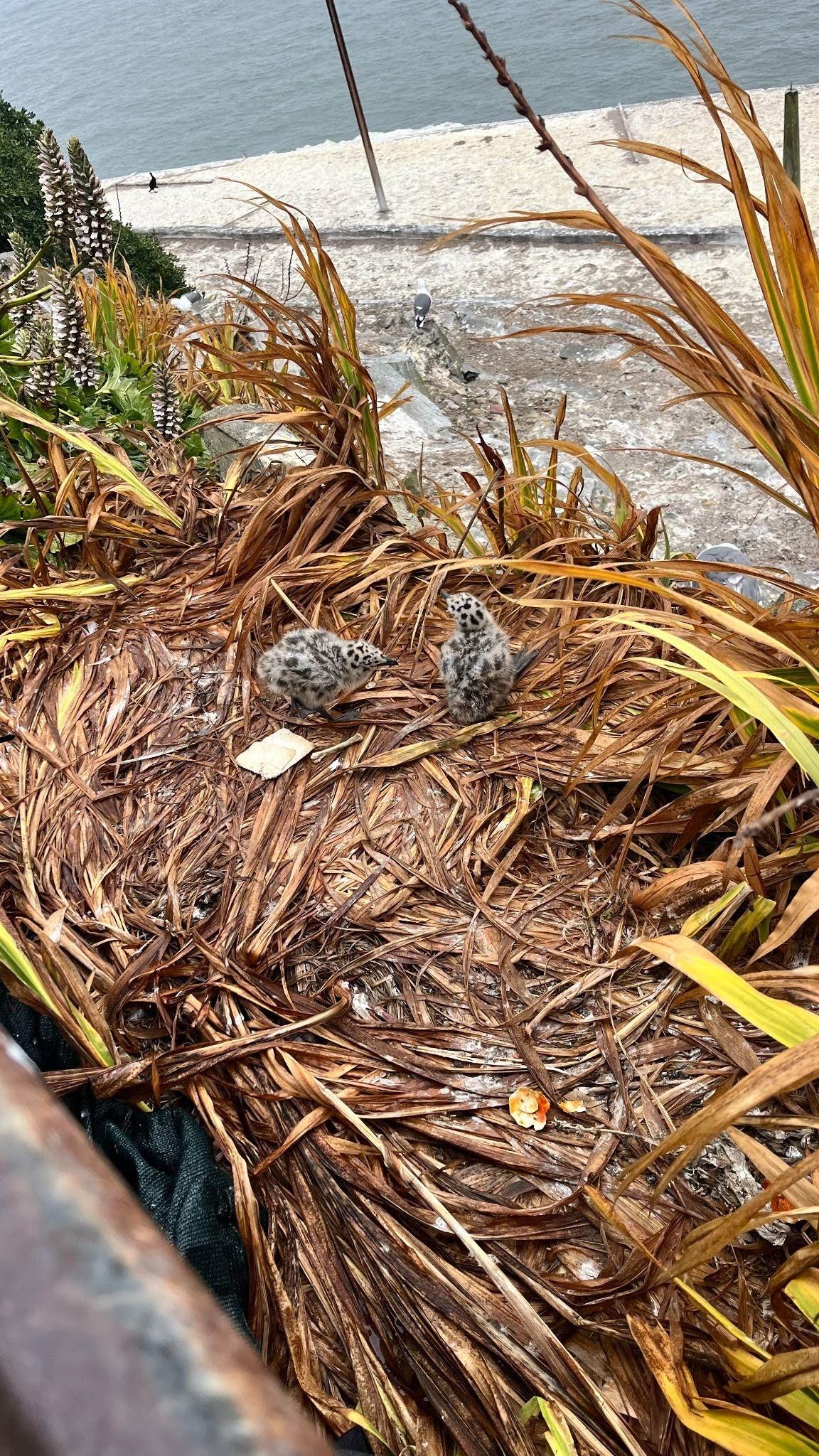
The Western Gull chicks were the first surprise.
Unlike the sleek white-and-gray adults we’re used to seeing around the Bay, these chicks are entirely covered in gray, darkly speckled down; excellent camouflage for the rocky terrain.
On Alcatraz, summer is prime time for these fresh hatchlings, and she was lucky enough to catch them as they transitioned from hatchlings to hopping and furiously flapping to build up their wing muscles. Watching them try their absolute best to fly, while getting absolutely zero lift off the ground, was pure wholesome comedy. By midsummer, these chicks had officially become fledglings, really learning to take flight.
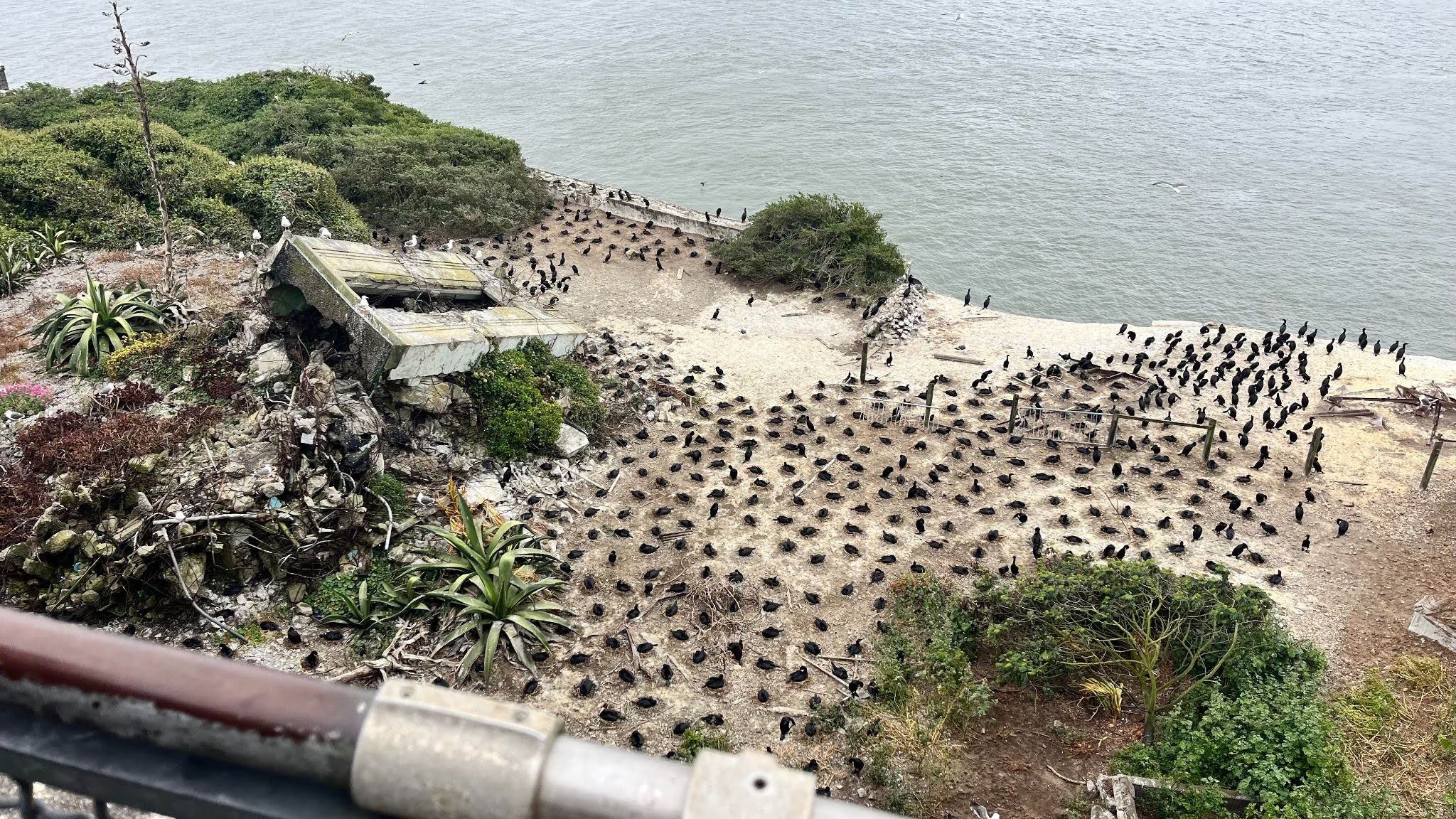
The cormorant colonies were the second surprise.
Brandt Cormorants nests are arranged in a remarkably uniform grid, spaced out perfectly across the cliffs. The strategy behind the layout is purely practical: the birds determine the distance between nests based on exactly how far they can reach out to peck at their neighbors. It’s a highly efficient—if slightly aggressive—way to establish a neighborhood boundary.
Michelle took a short 15-minute ferry ride over to the island. It’s usually foggy in the early morning, but often clears up by midday. Whether you catch the goofy hopping of June’s hatchlings or the dramatic first flights of fledglings as the summer progresses, the island’s natural side is well worth the trip.
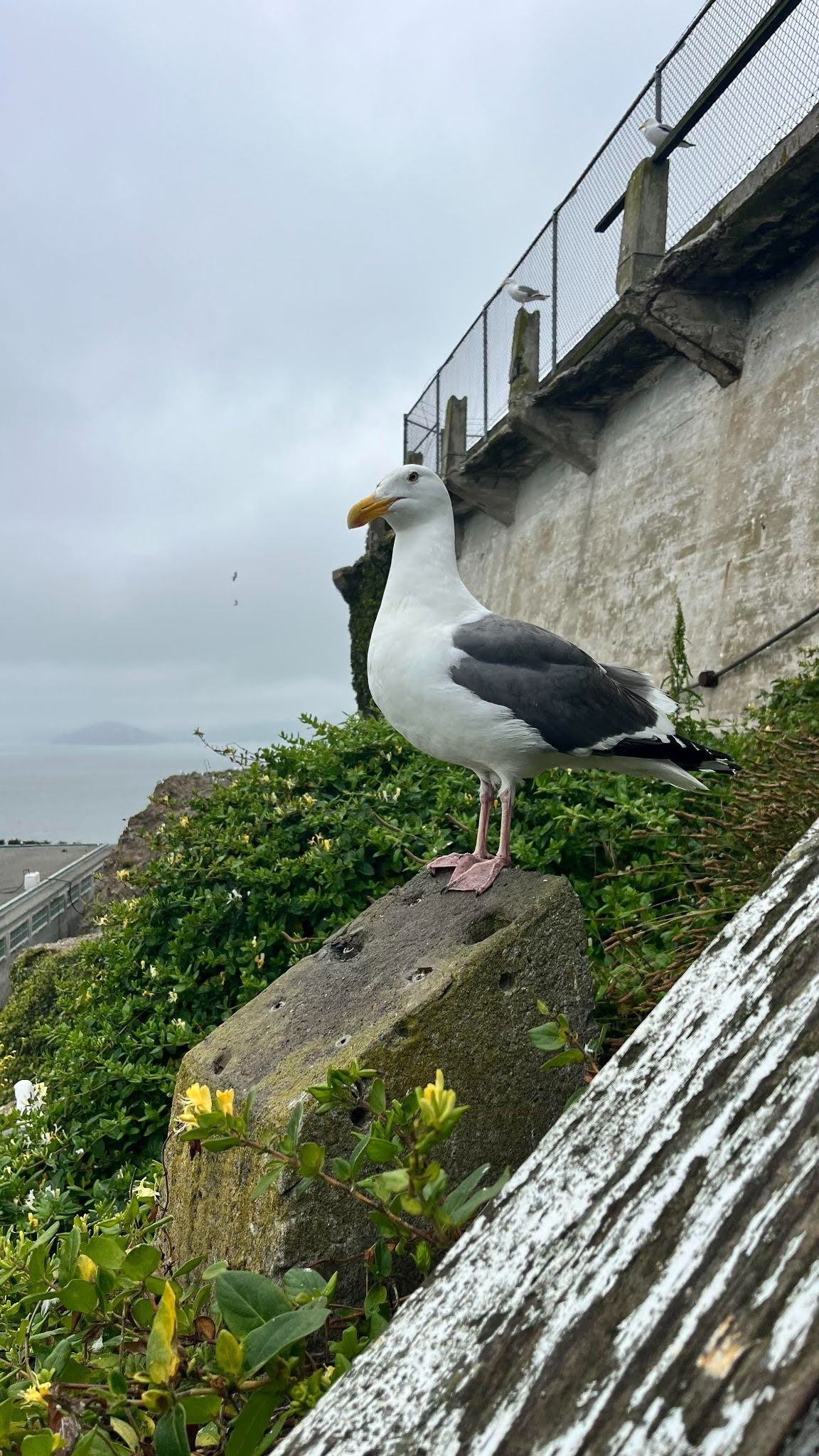
The visit connects directly to what Michelle asks of pilots. When she says keep 1,000 feet over the colonies, this is what that protects: chicks that cannot fly yet.
You can read more about the island’s waterbirds on the National Park Service site. If you want her to bring the talk to your club or hangar, reach out.